
Original: $595.00
-70%$595.00
$178.50The Story
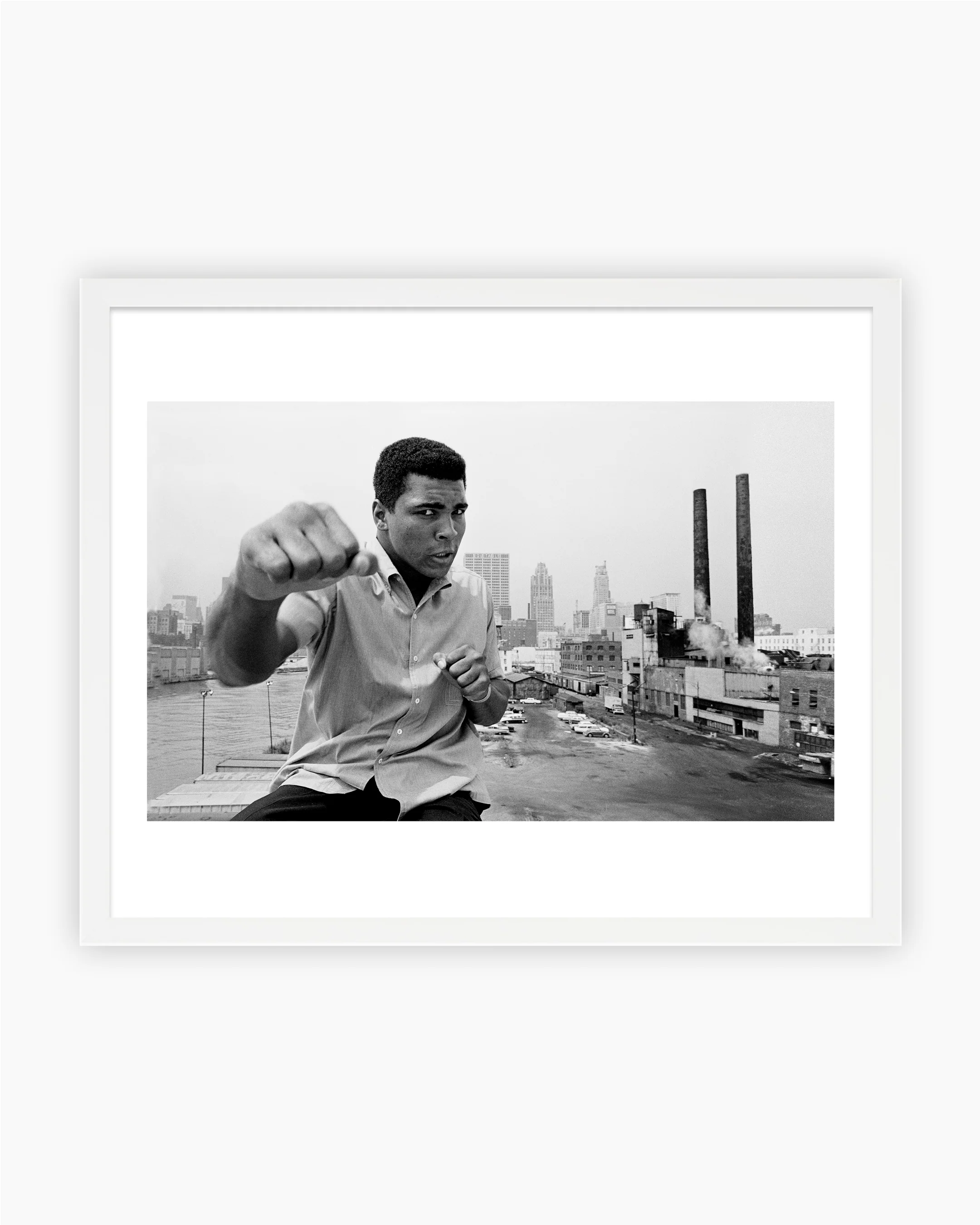
Thomas Hoepker’s 1966 portrait of Muhammad Ali captures the boxer at the height of his fame and cultural impact. Posing in a fighting stance on a bridge overlooking the Chicago River, Ali projects confidence, charisma, and defiance. The industrial skyline behind him — smokestacks, warehouses, and rising skyscrapers — sets this powerful figure against the backdrop of a working-class city that symbolized both grit and transformation.
By 1966, Ali had already stunned the world by defeating Sonny Liston and reclaiming his title. That same year, his refusal to be drafted into the Vietnam War brought him into conflict with the U.S. government, making him a polarizing figure yet also a symbol of resistance and conviction. Hoepker’s photograph distills Ali’s dual legacy as an unparalleled athlete and a voice of political and cultural change in 1960s America.

Details & Craftsmanship
Every detail has been carefully considered to bring you the perfect product.
Details & Craftsmanship
Every detail has been carefully considered to bring you the perfect product.
Description
Thomas Hoepker’s 1966 portrait of Muhammad Ali captures the boxer at the height of his fame and cultural impact. Posing in a fighting stance on a bridge overlooking the Chicago River, Ali projects confidence, charisma, and defiance. The industrial skyline behind him — smokestacks, warehouses, and rising skyscrapers — sets this powerful figure against the backdrop of a working-class city that symbolized both grit and transformation.
By 1966, Ali had already stunned the world by defeating Sonny Liston and reclaiming his title. That same year, his refusal to be drafted into the Vietnam War brought him into conflict with the U.S. government, making him a polarizing figure yet also a symbol of resistance and conviction. Hoepker’s photograph distills Ali’s dual legacy as an unparalleled athlete and a voice of political and cultural change in 1960s America.


